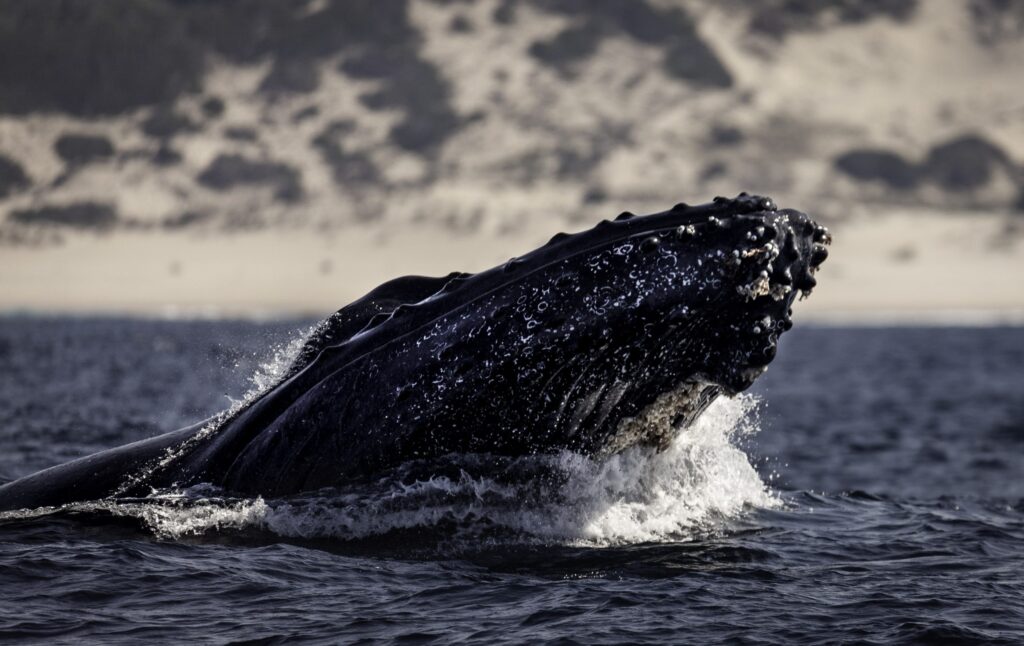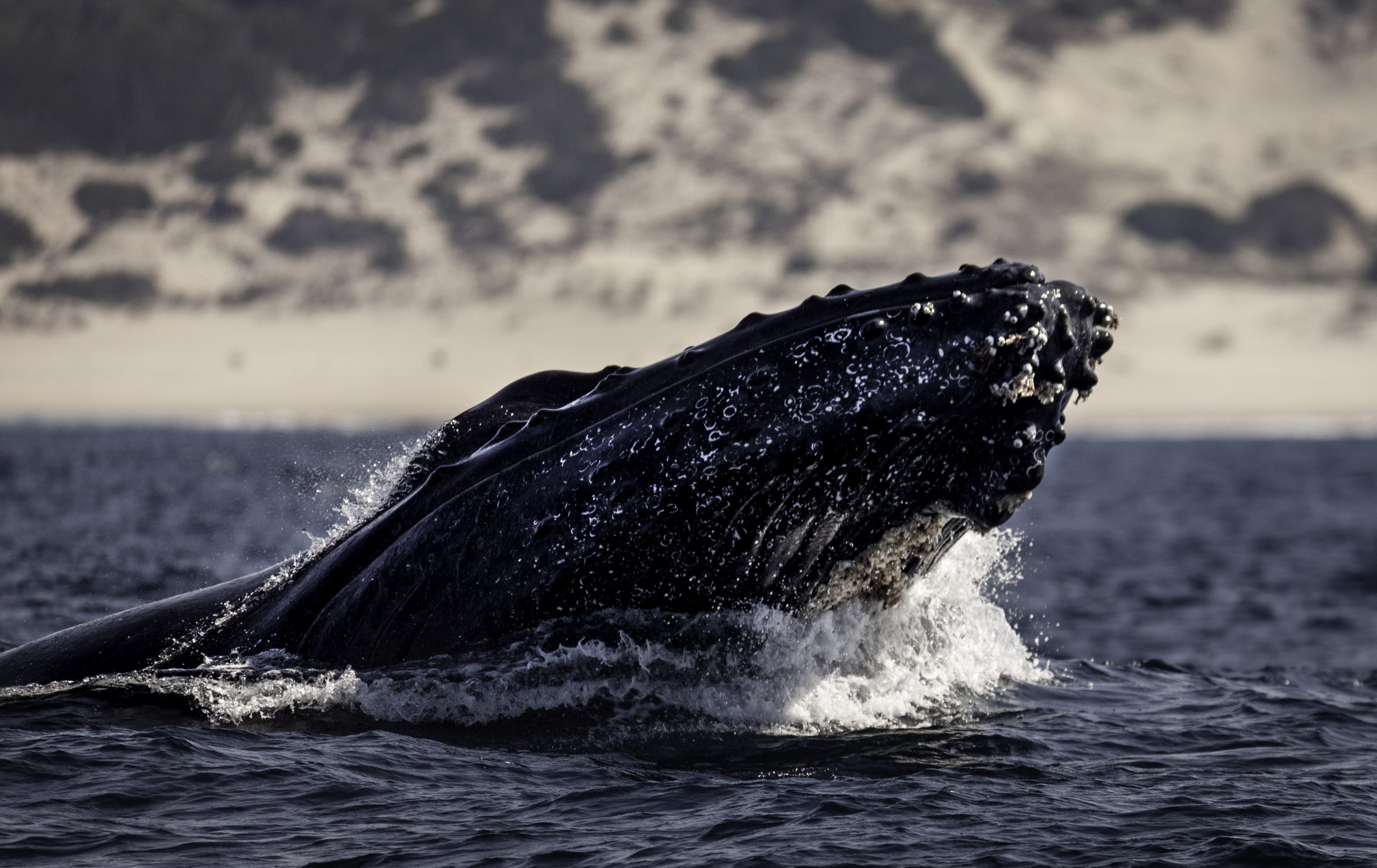
Every winter, from June to November, humpback whales migrate through the waters off Jangamo Bay. Since a pilot study in 2016 – with a full survey methodology rolled out in 2017 – Love The Oceans has been there to record them.
The team documents surface behaviour, pod formation and bioacoustics that, in its own words, had been never before studied in the area. The fieldwork is deliberately low-tech and repeatable: cameras, binoculars, a hydrophone, survey sheets, and DJI Mavic 2 drones to map megafauna from above. Photographs of whale flukes feed a long-term ID catalogue of the individual whales passing through Jangamo.
A reason to protect them
The whales are seasonal, but the work is not: resident whale sharks, manta rays and dolphins are logged year-round for identification and sighting frequency. The purpose is as practical as it is scientific – to prove that sightings are frequent enough to make responsible whale watching a viable ecotourism driver, generating income from a renewable resource and strengthening the case for a Marine Protected Area.
Prove that the frequency of sightings is enough to make this a viable ecotourism driver.
Love The Oceans, via the World Cetacean Alliance