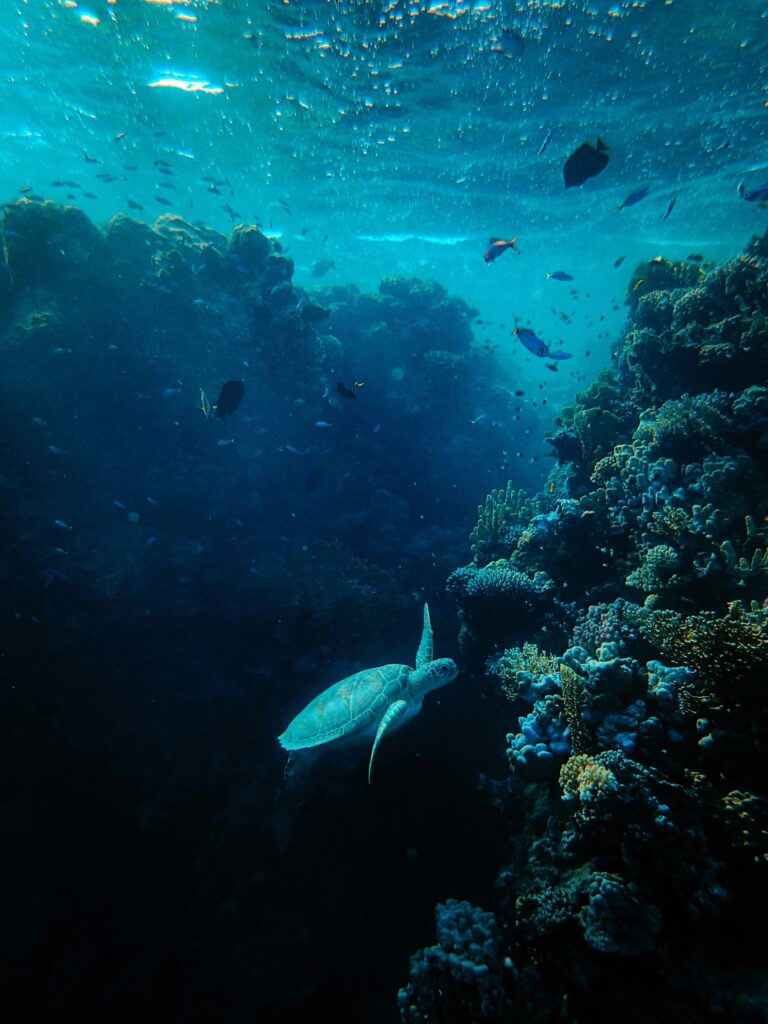
Jangamo Bay – the stretch of Inhambane coastline where Love The Oceans has worked for over a decade – is a designated Mission Blue Hope Spot. The designation names it as one of the ocean’s most critical places to protect, and pairs local conservation work with a global network of scientists, divers and funders committed to keeping it that way.
The Hope Spot was championed by Dr Sylvia Earle’s Mission Blue alliance after years of research into Jangamo’s reefs, whale shark populations and the community-led fisheries that share the bay. It sits alongside two other IUCN designations for the same waters: an Important Marine Mammal Area and an Important Shark and Ray Area – three overlapping signals of biodiversity too often missing from Mozambique’s southern coast.
Why it matters
Hope Spot status isn’t a protected-area in itself – it’s a megaphone. It tells the Mozambican government, international donors and dive travellers that Jangamo is worth fighting for, and gives LTO’s research a platform when pushing for formal Marine Protected Area status inside the bay.
LTO works directly with the Instituto Oceanográfico de Moçambique to make sure the conservation case is built on evidence, not just charisma. That evidence is now overdue to become policy: the research is in place; the community is ready; the reef is changing faster than the paperwork.
Ecosystem shifts emphasise the urgency of the work, and the need to move faster than the reef is changing.
Love The Oceans research team
What happens next
The next phase is turning the Hope Spot designation into a Marine Protected Area, co-designed with the fishing communities who have worked these reefs for generations. That means more volunteer dive time on the reef, more fisheries data from the beach, and more voices in front of the people who write the regulations. If you’d like to add yours, the links below are the fastest way in.