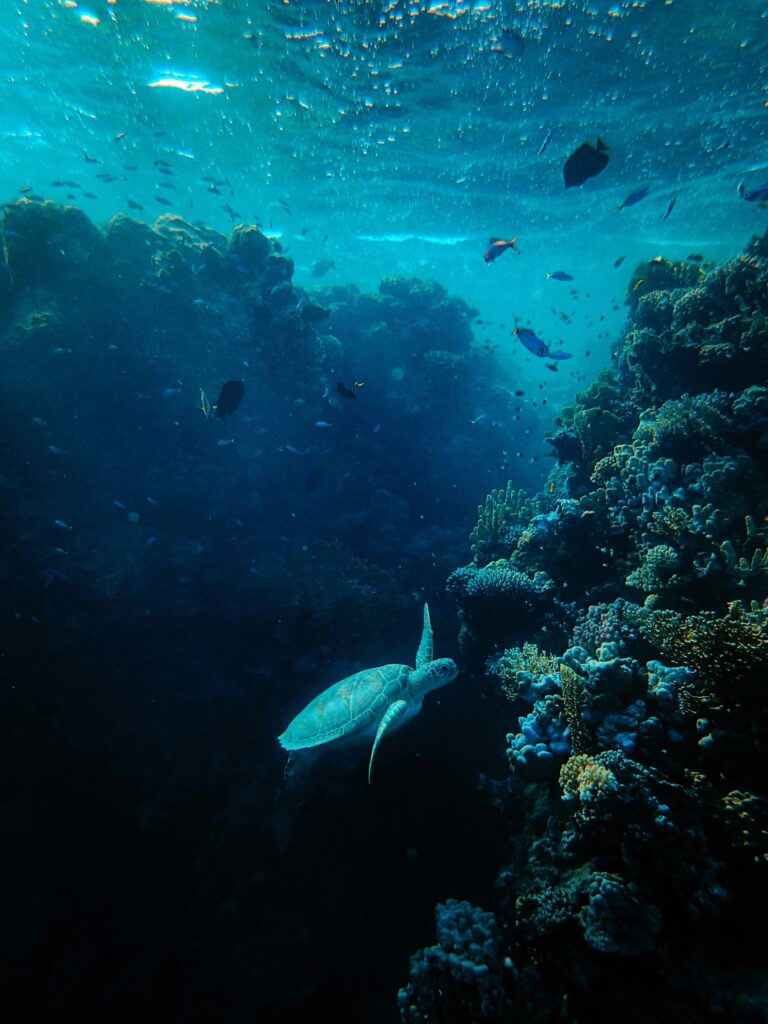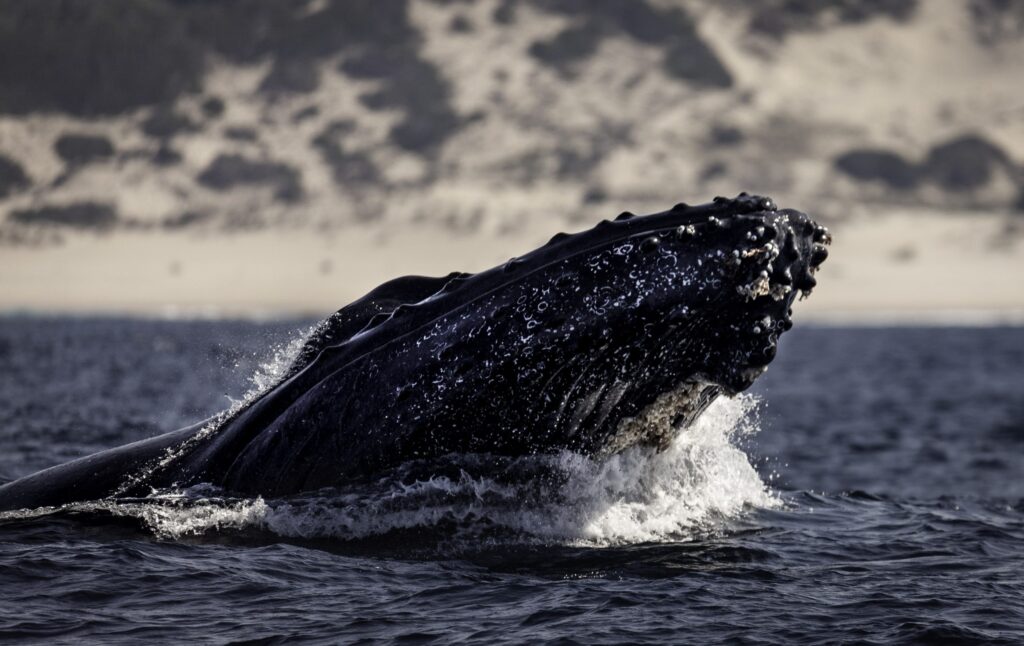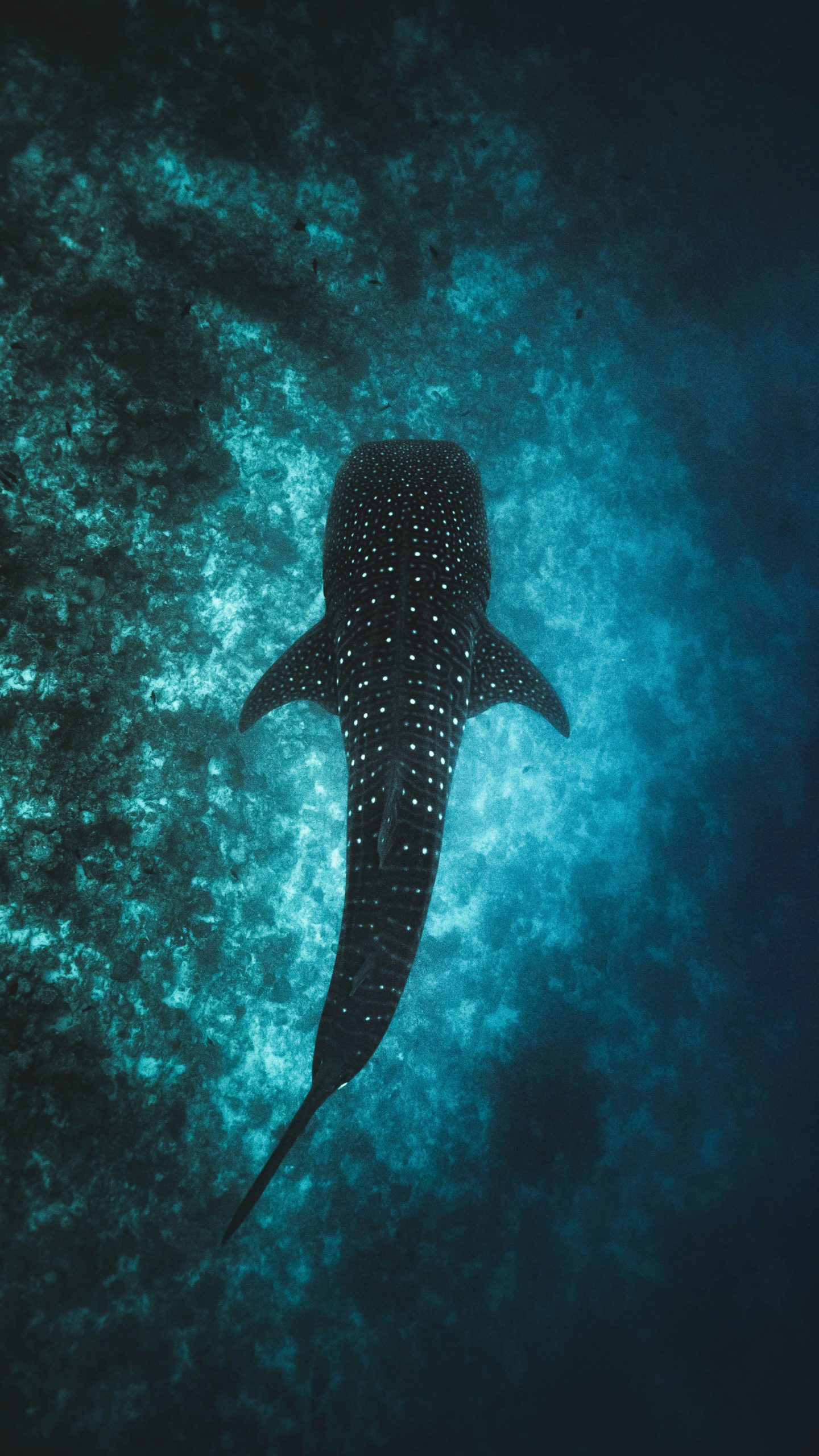
Jangamo Bay is one of only a handful of places on Earth where you can reliably see whale sharks and both reef and oceanic manta rays in the same week – often on the same dive. It’s one of the clearest signals we have that the waters off southern Mozambique support megafauna at a scale the rest of the coast has already lost.
Photo ID and the citizen-science pipeline
Every whale shark encounter is photographed from the flank. The spot pattern behind the gills is as distinct as a fingerprint; we match each one against international citizen-science databases so that individual sharks can be tracked across our records and those of researchers working the same migration route in Tofo, the Maldives, Madagascar and the Philippines.
Over the past two seasons, juvenile sightings have made up a larger share of our encounter log than any previous period on record. Taken together with the sizing data, it adds to a growing hypothesis that Jangamo acts as a nursery-adjacent habitat – a place where younger sharks build up before joining the wider Indian Ocean population.
Ecosystem shifts emphasise the urgency of the work, and the need to move faster than the reef is changing.
Love The Oceans research team
The warning signs
The good news is offset by a clear one: our manta ray sightings have fallen significantly in recent seasons. The causes are tangled – fishing pressure, climate-driven shifts in plankton, and offshore disturbance all plausibly contribute. Without formal protection of these waters, the signal is only going one way.
That’s why the megafauna work and the fisheries work aren’t separate projects. They’re two ends of the same argument: these waters can feed local communities sustainably and host globally significant populations of ocean giants – but only if the protections arrive while there’s still something to protect.